
KATE HUTCHINSON
Words: Justin Quirk
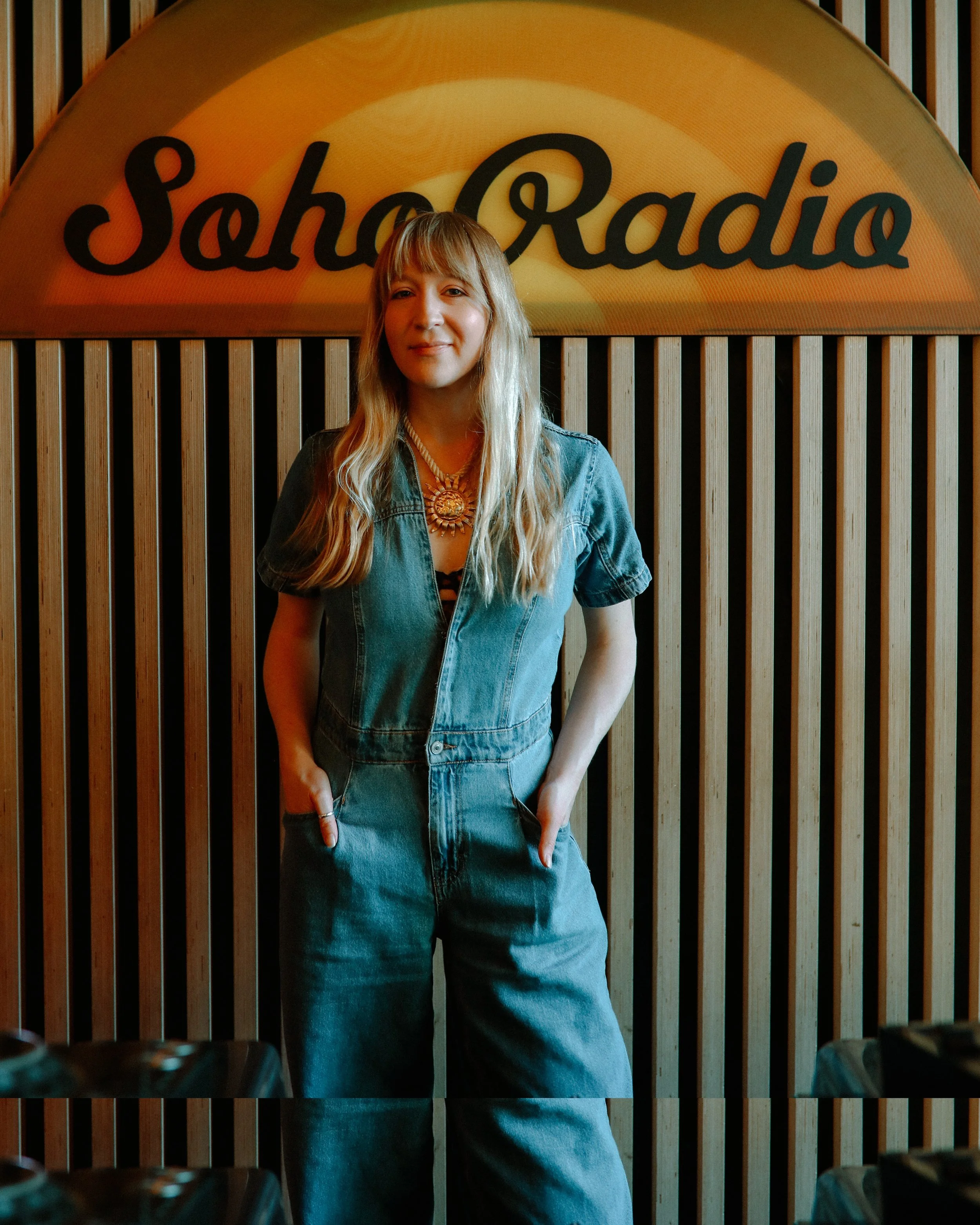
Kate Hutchinson has always been a connector. Coming of age through the early noughties rave/indie/anything goes community, she was hired by Time Out’s clubbing desk, a seven-night-out-a-week baptism of fire, documenting dancefloors all over the capital as that bit of print media enjoyed its last hurrah. Since then she’s written extensively about club music in its very broadest terms, DJ’d her sets of eclectic chuggers across the more interesting end of festivals, bars and clubs nationwide, and hosted shows on NTS, Worldwide FM and then Soho Radio where she interviewed everyone from Saul Williams to Daniel Avery. She also poured several years of energy into the essential podcast series The Last Bohemians, which documented some of the 20th century’s most creative, rebellious women as they looked back on their lives and work. ‘I always remember the DJ Jyoty saying that she likes to DJ but wouldn’t call herself ‘a DJ’ – I’m not sure if that’s changed for her now, but I feel the same. It’s something I love to do but the reason I do it is to make my friends dance – there’s no better feeling! – rather than for any sort of career move. A highlight was definitely playing after Gilles Peterson at a festival this summer, though.’
What was the scene that you came out of?
Back in the early 2000s, when I was a teenager, subcultures were split into two groups. There were the mainstreamers, the normies, or there was what was called alternative. Now, alternative would be split into micro scenes, micro genres. But back then, you were just alternative, a ‘grebo’, and so the dominant culture was whatever was on MTV2. Obviously, completely commodified by the time it reached my ears as a suburban kid living in Kent and then Basingstoke, but it was anything that felt anti-establishment - rock, nu-metal, skate punk. So that was the first subculture where I felt like it was my own. There were bands my age, people were putting on gigs. There was only four bands in Basingstoke, but I made a fanzine for the local scene, because I was so passionate that I was going to be the Lester Bangs character in Almost Famous, but without the cough syrup and speed addiction. I was just always really obsessed by whatever you would define as youth culture. I used to buy i-D magazine and Dazed, and then when I went to uni in London the first thing I did was go to a talk with the editor of i-D at the Fashion and Textile Museum.
What was the first club you went to?
I snuck in underage to a rock night at the Agincourt in Camberley. I didn't realise that my friend's dad was the bouncer, so he had to let me in. Maybe that counts as my first guestlist blag, I don’t know. When I started getting into proper nightclubs and dance music and working on a magazine desk where people had opinions, I used to be a bit embarrassed of my nu-metal past. And then I remember speaking to Bonobo, of all people – Grammy nominated electronic musician Bonobo - and he had also spent nights at the Agincourt. Similarly, I interviewed composer Ólafur Arnalds recently, and I found when I was going back through my fanzine for the local Basingstoke and south coast scene, which was called Retroflex, that I'd written about his hardcore band, Fighting Shit. I'm always really heartened by these connections and that whatever crap thing you might be involved in when you're younger, you should always cherish it and not be embarrassed, because it was someone else's entry into music too.
So when you were up in London and proper clubbing started, what was that? Things like Trash?
The first Trash I ever went to was the last ever one (in 2007) and then I religiously went to Durrrr, the party that followed on a weekly Monday night at The End. That whole rock and rave thing was happening and was an ideal gateway drug into clubbing with a more electronic soundtrack (ie house and techno). Indie had made a massive comeback and suddenly there were indie DJs rising again, and electro remixes and mashups and stuff were everywhere. So it was sort of bridging my rock world with this dance music world. And arriving in London then as a student, there were a plethora of places to go to like the 333. Open till three, three floors, free entry, it was fantastic. I loved it. It felt seedy. From there I discovered DJs who’d been doing that before then, like Andrew Weatherall, who I was so completely inspired by and I shared his musical outlook and then a whole other portal opened into electronic music of any ilk that felt alternative and outsidery, whether it was electronic body music (EBM) or dub.
How did the Time Out job change things?
In terms of proper clubbing – ie with a sound system that doesn't sound like it's been put through a mangler and DJs that can mix records – I didn’t have any real comprehension of that until I started my job. And it was great because I quickly realised that clubs were the petri dish where all of the amazing sounds and musical trends that I've heard about were happening and DJs could tell those stories with their sets. I was at the coalface of these new musical evolutions and that was really exciting – I don’t just mean this rock/rave crossover but sounds like dubstep, grime, UK bass music in all its forms, which were all emerging at that time. I was always really interested not so much in purism but when and how all of these genres coalesced. I also learned about DJing as an artform and a way to connect dots and tell stories and, crucially, about musical evolutions like Chicago house and Detroit techno and their socio-political significance. I really identified with this idea of electronic music as underdog music – clubs as a place not just as escapism but as utopias in which to make the world you want to see, with proper diversity across gender/class/race etc.
What sort of venues did you most enjoy?
Clubs that had a sense of mischief about them like Turnmills. Someone from Modular Records would have been DJing and probably the Horrors were playing live. But it had that sense of getting lost in a club, like anything could happen, you're meeting people in the loo queue. I have really clear memories of The Ghetto as well, where they had Nag Nag Nag. Midweek, cheap entry. It was super queer, it was super dress up. People were wearing DIY outfits and getting really messy, and it wasn't really about the sort of quality of the music. Then a bit later, parties like Butterz at Canvas were incredibly special in terms of bringing sounds like grime – gigs of which were essentially banned at the time with the racist Form 696 in effect – into the club and giving it a platform. That felt punk. Now of course I'm a total snob: I prefer to go somewhere where there's a decent sound system, like Giant Steps at my fave place in the world, the Hackney Bathhouse. And in terms of my introduction to that kind of club where there was a certain reverence for the sound and the atmosphere, it would have to be Plastic People.
What was so special about that?
Everyone knows the story about the pitch black room, Funktion One sound system, DJs just tucked away in a booth, not really looking at them, and the place that club had in nurturing new genres like broken beat, dubstep, it had FWD there every Thursday. I went on one of the closing nights, and Ade [Fakile, founder of PP], did a shout out to the Time Out clubbing desk. I always remember because I just thought, ‘oh, that's so interesting that the pages I edited were in some small way pivotal.’
Where does that knowledge live now?
We're getting back slowly there, I think. I love this page on Instagram called G’s Selections. It's just somebody who's clued in to interesting events, and she does a calendar roundup. It's so simple, but because we're drowning in the algorithm soup and endless lists on RA and Dice no one can find anything, we're starting to revert back to mailing lists and social media pages with club recommendations, which I think is wicked.
What was a record that changed the way you think about club music?
Township Funk by DJ Mujava. That was a really pivotal record for me because I think it was one of the dance tracks that really opened my third eye to non-westernised rhythm in electronic music. Beyond the sound system music I’d hear every year at Notting Hill Carnival, I think it was probably the thing that really lifted the lid on non-eurocentric dance music from around the world, and that set me off on a bit of a path, really. Appreciating and being really interested in, not just traditional and vernacular music, but the potential of forward-thinking, culture-shifting, contemporary music from the African continent and beyond.
And recent record?
Soft - Art Farmer (Kaoru Inoue Remix). This originally came out in 2001 but I just discovered it via a compilation of underground Japanese electronic music that's forthcoming on Cosmocities Records. It's an 8-minuter that builds and builds with these incredible drums – sort of like psychedelic Afro-house. I’m obsessed with great drum tracks at the moment – see also Kitale by Sam One which has been rinsed by DJs like Jamz Supernova and Ruby Savage this summer.
What’s a club you’d bring back?
I’ve really missed The End. It was such an important club in terms of its size. You don't really have any medium-sized clubs in London anymore. And I’d love to see bands in clubs again. There were so many places that you could do that back then - Trash, White Heat, Queens of Noize’s things, Frog at the Astoria. I think it's kind of interesting - it adds something, and I don't think bands get that opportunity any more to be messy and fuck it up a bit in front of a rabid, drunken 2am audience. Maybe this still happens and I’m showing my age but imagine getting to see the next Fontaines DC play at 2am, right at the peak of the night, in a massive crowd – it would be so exciting.
What have you been to recently that was good?
The recent BBE parties for their 30th anniversary have been superb, mainly because everybody looks incredible, really dresses up and makes an effort. Lots of hats, really slick. It's a really mixed crowd, though it leans slightly older, and I think increasingly as I hurtle into my 40s, I welcome being around people that know what dancefloor etiquette is and who are all about dancing rather than stumbling or shuffling. Places like Giant Steps in Hackney Wick, the Touching Bass parties, anything that they do is just really spectacular, and I’m really cheered by the Our Latin Thing parties where they’re bringing old salsa and boogaloo records back onto the dancefloor and really paying respects to the genre. The last thing where I danced my arse off was Bushbaby's block party at the Fox & Firkin. There’s such an interesting, fresh Latin American scene in London, also DJs like Cosmo Sofi Coco Maria. I'm really excited by people being interested in dancing and moving their body rather than just getting off their tits. I love all the videos of the intergenerational, outdoor community parties like Toribio’s Public Service and Natasha Diggs’ Dance Is Life in New York and people going for it – I’m desperate to go to one soon. They give me so much life!