
Andy Crysell
Words: Justin Quirk
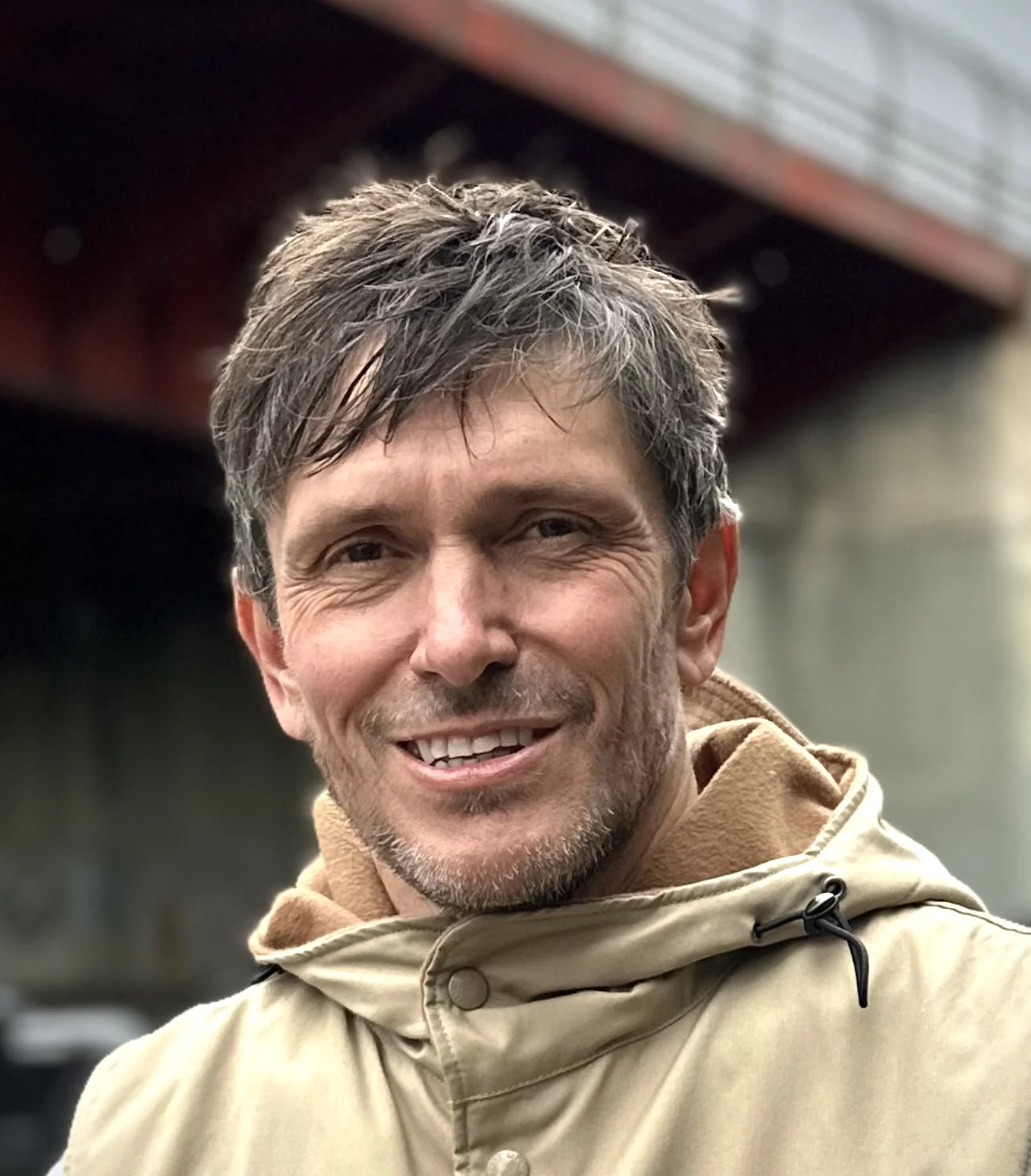
Words: Justin Quirk
Andy Crysell has spent three decades connecting underground, nighttime culture with the wider, daytime world. First as a journalist for the likes of DJ, Muzik, NME and The Face, then with his own hugely successful creative and insight agencies, and more recently with his book Selling The Night, an eye-opening history of how every industry from tourism to gaming has co-opted club culture. More recently, he’s also produced two volumes of No Way Back, compendiums of lost subculture writing from style magazines and the music press, documenting the earliest days of scenes that came to dominate our cultural world.
Dividing his time these days between London and NYC, we spoke with him via Zoom to find out how nightlife shaped him and gave him the life he now leads and the value of ‘Learning from, not longing for, the past.’
How do you describe what you do?
It depends on who you're in the company of. The three buckets I put it in are business founder, which sort of means entrepreneur, but I struggle with that word. Then author/writer. And then cultural strategist, which is slightly more opaque, but I’m somewhere in that kind of space.
What was the first club you remember going to?
I saw a very young Carl Cox DJing at a local football club in Rosehill, South London. But I guess the first ‘proper’ club I went to was the Mud Club, just pre-acid house. I don't know how I got in. I was probably 16 and I must have looked about 14. I feel quite lucky to have caught just a little taste of London clubland, pre-acid.
What are your memories of those parties?
It was Jay Strongman and Mark Moore as DJs. There were bits of go-go and hip hop, a house record followed by an electro record and so on. Disco tracks in there as well - a really nice blend and a really interesting audience. Philip Sallon used to run it, and we used to turn up probably dressed two-thirds football casual, one-third attempted B-Boy. And he was like, ‘you can come in, but only if I'm allowed to spray you in neon paint,’ because we looked too boring. So he'd spray our sweatshirts with this sort of wash-off neon spray paint and then they’d let us in. I suppose clubland felt a little bit more like everyone was trying to dress differently from each other at that point.
Was there one party that you look back on as the pivotal night for your crew?
So many to choose from - including Boy’s Own parties and weekenders. But I’ll opt for
Spectrum at Heaven. I went to earlier things, the Shooms and the Clink Streets, but there was something about Spectrum - it was hinting at something bigger scale. It felt crazy that you could get that many young people out on a Monday night. I guess I quite liked the idea of this scene getting bigger, and Spectrum was emblematic of that. This idea that it was opening its doors to more people.
How did your industry career start?
I left school at 16. I didn't go to university. My dad was a builder and my mum was a cleaner, no-one in my family had ever been and it wasn't really flagged as a thing to do. I didn't like school and I was just keen to get out, really, so I did some jobs on a building site, in a DIY store, and then I worked as a runner for a company in Soho, delivering photos to ad agencies. It was a really lovely opportunity just to walk around a Soho that was in the process of changing, but it was still pretty raw. There were a lot of characters around, and the ad agencies looked so exciting.
I'd always had a fascination with music, magazines and media, but I had no idea of a way into it. So I'm not really sure what would have happened if acid house didn't come along, but I feel like I owe a lot to it in terms of giving me direction, and even confidence. Showing you that there are other people doing things off the back of this culture. In my head, I can draw a through line from what I learnt back then - about creativity, about business, about myself - and having the conviction to start my own agencies, ending up with 100 staff and working for brands like Apple and Nike.
I’m also aware that, even though it wasn’t exactly easy to join those dots back then, it’s a lot harder for young people today. Experimenting without having a safety net of privilege to back you up is a tough call. Not least, back then you could get away with signing on, claiming housing benefit, things like that, while you found your way in these creative fields. It doesn’t work like that now.
And what was that first break?
I didn't set out to become a music journalist, I wasn't one of those people that grew up on NME - I was more Smash Hits, then the style mags. I just wanted to be involved in club culture, really. So we were running and helping with a few club nights, I was selling tickets to some big raves. I had a record deal that didn't go very far, and then amongst it, I was just doing a bit of writing, and that was the bit that stuck. It’s pre-internet, and I wrote a letter to i-D to write for their DJ of the month slot on Kevin Hurry and Kevin Swain, or DOP, as they were called. Matthew Collin (author of Altered State) rang up and gave me about five days to do it. It felt like a life changer, in a way - I owe him a lot.
What’s something you’d bring back from those days?
Kensington Market. When you think of how London has changed, it seems bizarre now to think that people were actually doing stuff that far west! I wonder if something like Dover Street Market is the modern equivalent, but it doesn’t have the DIY-ness. And record stores like Trax in Soho - it only had about two years when it was really dominant but when that Italian house sound came in it was all about Trax. And Mi Price was a brilliant record store in Croydon where Colin Dale worked. He was the polar opposite of the moody record store employee. He was just so forthcoming and helpful, fully enthusiastic.
Is there a record from that time that changed your perspective?
Public Enemy, It Takes a Nation of Millions To Hold Us Back. It just sounded so different to anything I'd ever heard before. It just felt so exciting. I'd been listening to loads of hip hop before that, which I loved - Ultramagnetic MCs, Big Daddy Kane, Special Ed, BDP - but this just sounded so, so one-of-a-kind. A collage of noise and then the political component. I saw the Def Jam tour with them and Run-DMC and Derek B, but I mainly associate it with driving around London with my mates in battered old cars with £1.50 of petrol in the tank
Ultimate end of the night record?
Quite an obvious one, really, but Let The Music Use You by the Nightwriters. It’s just such a lovely record, a lot of energy, but it also feels like it's a concluding piece of music. It’s a house record, but doesn't sound like a house record in some ways.
New music you’ve been enjoying?
Earl Sweatshirt. I love his stuff, that kind of conversational stream of consciousness hip hop. Luke Una’s latest E Soul Cultura lives up to the standards of the previous two. Laurel Halo’s Midnight Zone film score - amazing, if probably best not listened to if you’re in a dark mood. Jane Weaver’s psych-folk is pretty beguiling. And Bradley Zero with his Rhythm Section label - I love how that overlaps with the studio and the Jumbi venue.
And what are you working on next?
Issue two of No Way Back. The project came to life because me and Mark Maddox (my partner in it) felt that there’s a lot of obvious stories about club culture that get resurfaced, but we wanted to try and get a bit deeper into the back story. We want to present this stuff in a way that feels relevant today. Of course there's a nostalgia component to this, but really it’s about what can we learn from it? Hence our strapline: Learning from, not longing for, the past.
The first issue was very well received. Lots of DJs and producers and record label bosses bought copies. And as much as it's lovely selling it via our own platform, it’s really about seeing it when you walk into a store. You can't beat that in-real-life experience. A highlight in issue two is a 1983 piece called Behind The Groove from David Toop’s short-lived Collusion magazine. An exploration of New York’s dance underground - among the earliest, perhaps the very first time, that figures like Larry Levan, David Mancuso, Walter Gibbons, Shep Pettibone, John ‘Jellybean’ Benitez and François Kevorkian had ever been interviewed. I remember it used to circulate in photocopy form in London in the 1990s - pre-internet, it felt like the only way to find out about that world.
What I really like about a lot of this curated material is that when people wrote about this stuff - hip hop or disco or graffiti etc - they had no idea that people would still be talking about it coming close to 50 years later. It’s so in the moment. There's no post rationalisation going on, there's not a lot of theorising. It's just literally, this is what's happening now. It’s like a first draft of history.
Beyond No Way Back, I’m part of the advisory team for the Museum of Youth Culture, which opens in London, up near Coal Drops Yard, very shortly. Amazing work by Jon Swinstead (Sleaze Nation founder) and his team. I’m also a trustee of 20/20 Levels - a charity helping underrepresented young people to access jobs and to start their own businesses. No shortage of things to work on there.
https://www.nowayback.co/